Egypt compresses an extraordinary amount of history, landscape, and logistical complexity into one country. Whether you're positioning yourself near the Giza Pyramids, sailing the Nile between Luxor and Aswan, or basing yourself steps from Tahrir Square, where you stay in Egypt fundamentally shapes what you can see and how much time you waste in transit. This guide breaks down the most strategically located hotels in Egypt - from Cairo's pyramid belt to the Red Sea coast - so you can make a booking decision grounded in facts, not brochure language.
What It's Like Staying in Egypt
Egypt is one of the few countries where ancient monuments are embedded directly into modern urban life - the Giza Pyramids sit at the edge of a sprawling city of over 20 million, Luxor Temple is walkable from mid-range hotels, and the Red Sea coastline offers a completely separate travel experience within the same country. Location choices in Egypt are not interchangeable: staying on the wrong side of Cairo can cost you hours of daily commuting. Crowds at major sites like the Valley of the Kings or the Sphinx peak sharply between 9am and 1pm, and around 70% of international visitors concentrate their stay in Cairo alone, often missing the quieter but equally significant sites in Aswan or Marsa Alam.
Why Choose Central Hotels in Egypt
Central hotels in Egypt are defined less by star rating and more by proximity to specific landmarks - Luxor Temple, the Giza Plateau, or the Egyptian Museum - that determine how much of your trip is spent actually sightseeing versus commuting. In Cairo, the difference between a hotel 400 metres from the Sphinx and one 8 kilometres away translates directly into savings on taxis, tuk-tuks, and time. Centrally located properties in Egypt often include airport shuttle services, which is a meaningful practical advantage given that Cairo International Airport is around 30 km from the Giza area. Unlike beach resorts in Hurghada or Sharm el-Sheikh, central hotels here prioritize access to cultural sites, and many offer dining options with halal menus, multilingual staff, and flexible breakfast formats suited to early-morning site visits.
Main advantages of central hotels in Egypt:
- Walking or short-ride access to Egypt's most visited monuments and museums
- Multilingual front desk staff familiar with tour logistics and site schedules
- On-site or nearby dining with halal, vegetarian, and continental options
Main trade-offs in this specific zone:
- Central Cairo hotels near Giza face significant street noise and traffic congestion
- Nile cruise hotels operate on fixed departure schedules - missing your boarding day is non-recoverable
- Properties very close to major sites can attract persistent vendor activity in the surrounding streets
Practical Booking & Area Strategy
Egypt's geography splits naturally into four distinct stay zones, each serving a different travel intent. Cairo's Giza district is the entry point for most international travelers and offers the densest concentration of central hotels near archaeological sites. Luxor functions as the base for Upper Egypt exploration, with Karnak Temple, Luxor Temple, and the West Bank all accessible from centrally located properties. The Red Sea coast - particularly Abu Dabbab near Marsa Alam and Dahab on the Sinai Peninsula - offers beachfront and diving-focused stays that operate almost independently from the Nile Valley circuit. For travelers looking to cover both Cairo and Luxor, flying domestically between the two cities takes around one hour and is significantly more practical than an overnight train. Dahab remains one of Egypt's most underrated bases: quieter than Sharm el-Sheikh, with a genuine local atmosphere and direct access to Blue Hole diving sites. Key attractions to plan around include the Valley of the Kings, Abu Simbel temples, the Egyptian Museum in Cairo, Medinet Habu Temple, and the snorkeling reefs at Abu Dabbab.
Nile Cruise Stays: Luxor & Aswan
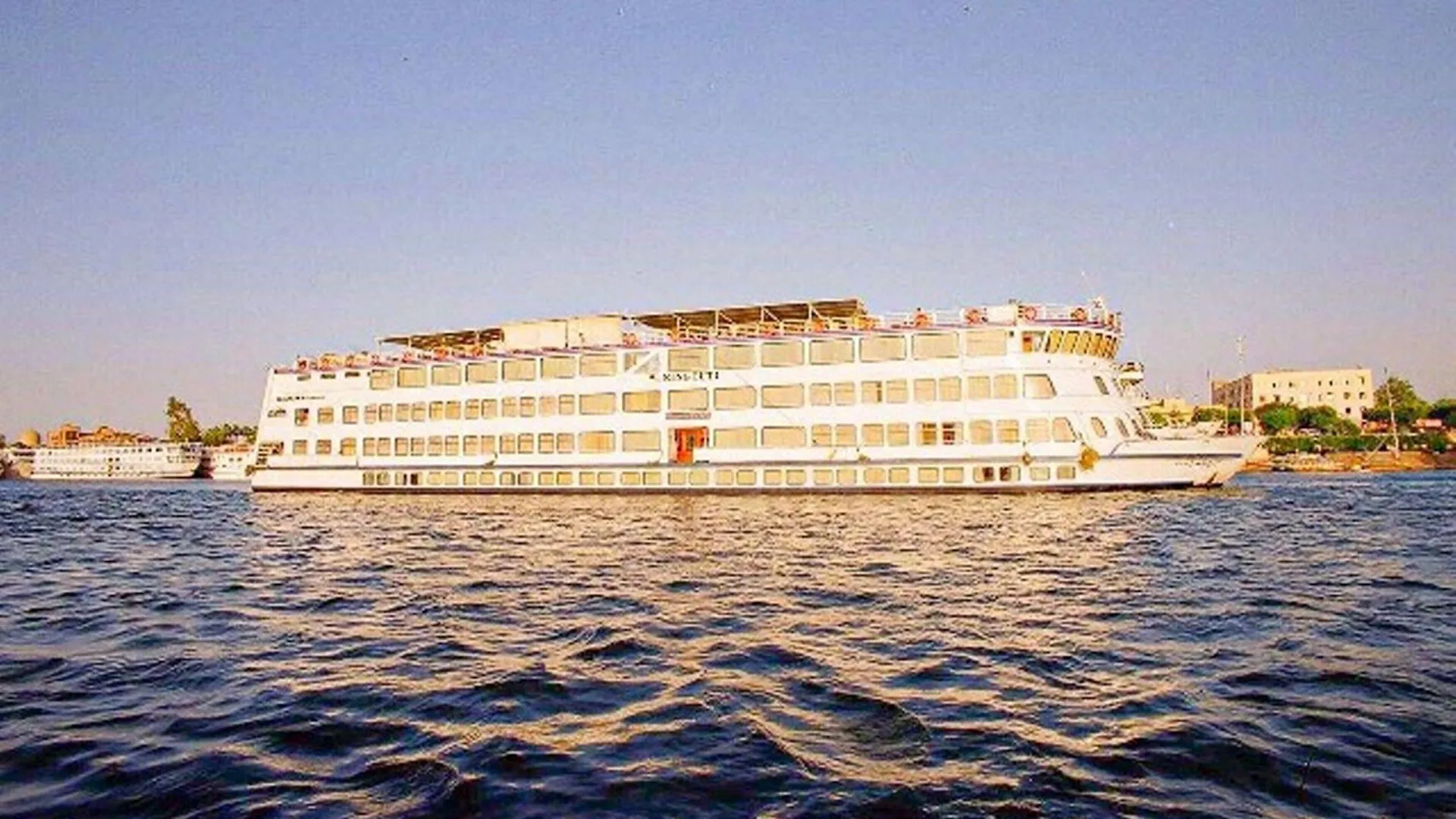
For travelers prioritizing the Upper Egypt temple circuit, Nile cruise hotels departing from Luxor and Aswan offer the most efficient way to cover sites along the river without changing accommodation. Both properties below dock within 1.5 km of Luxor Museum and 700 metres to 1.2 km from Luxor Train Station, making pre-cruise logistics straightforward.
-
1. King Tut I Nile Cruise - Every Monday 4 Nights From Luxor - Every Friday 7 Nights From Aswan
Show on map


 Check-infrom 12:00 until 15:00Check-outfrom 07:00 until 08:00
Just a few rooms left at the best rate!
fromEGP 8830
-
2. Renaissance Nile Cruise - Every Saturday From Luxor To Aswan For 4 Nights , And Every Wednesday From Aswan To Luxor For 3 Nights
Show on map


 Check-infrom 12:00 until 14:00Check-outfrom 08:00 until 11:00
Just a few rooms left at the best rate!
fromEGP 26541
Cairo: Pyramid Belt Hotels
Cairo's Giza district concentrates the highest-demand central stays in Egypt. The three properties below all sit within 1.7 km of the Giza Pyramids, with positioning ranging from 400 metres from the Great Sphinx to a hostel 500 metres from Tahrir Square - covering the two main Cairo base camps for different travel styles.
-
3. Egypt Pyramids Inn
Show on map


 Check-infrom 14:00 until 23:59Check-outfrom 08:00 until 11:00
Just a few rooms left at the best rate!
fromEGP 2552
-
2. Pyramids Gate Hotel
Show on map


 Check-infrom 13:00 until 23:30Check-outfrom 11:00 until 12:00
Hurry – almost gone at this price!
fromEGP 2552
-
3. Dahab Hostel
Show on map


 Check-infrom 14:00 until 23:59Check-outuntil 12:00
Hurry – almost gone at this price!
fromEGP 408
Red Sea & Sinai: Beach and Dive Stays
Egypt's Red Sea coast operates on a completely different rhythm from the Nile Valley. Abu Dabbab near Marsa Alam and Dahab on the Sinai Peninsula both attract travelers specifically for marine life - dugongs and turtles at Abu Dabbab, world-class reef diving at Dahab's Blue Hole. These are not secondary options; they are distinct destination stays.
-
1. Abu Dabbab Lodge
Show on map


 Check-infrom 14:00 until 23:59Check-outuntil 12:00
Rooms filling fast – secure the best rate!
fromEGP 5615
-
2. Al Deira Dahab Hotel
Show on map


 Check-infrom 14:00Check-outuntil 12:00
Rooms filling fast – secure the best rate!
fromEGP 715
Smart Travel & Timing Advice for Egypt
October to April is the practical travel window for Egypt, with temperatures across Cairo, Luxor, and Aswan dropping to manageable levels for walking archaeological sites. Summer months - particularly July and August - push Luxor temperatures above 40°C, which makes outdoor site visits genuinely difficult between 10am and 4pm. Nile cruise schedules operate year-round, but booking the King Tut or Renaissance departures at least 6 weeks in advance is advisable for peak months like December and March, when European and North American winter travelers fill cruise rosters quickly. Red Sea destinations like Dahab and Abu Dabbab see their busiest periods from November to March, when underwater visibility is at its clearest and air temperatures are cooler. For Cairo, last-minute availability at Giza-area hotels can be found outside school holiday windows, but airport shuttle and parking-included properties book out faster than standard rooms. A minimum of 3 nights in Cairo, 2 nights on a Nile cruise, and 3 nights at a Red Sea base gives a realistic first-visit structure without rushing major sites.